
Web search capability
Chats with a plain language model can reach out to the web to answer questions requiring current data beyond the model's training. Organizations control this through configuration.
WARNING
Web search applies to plain model chats only. AI-Hub agents ground their answers in the knowledge bases they were configured with, so the "Web Search" button is not offered when an agent is selected in the model picker.
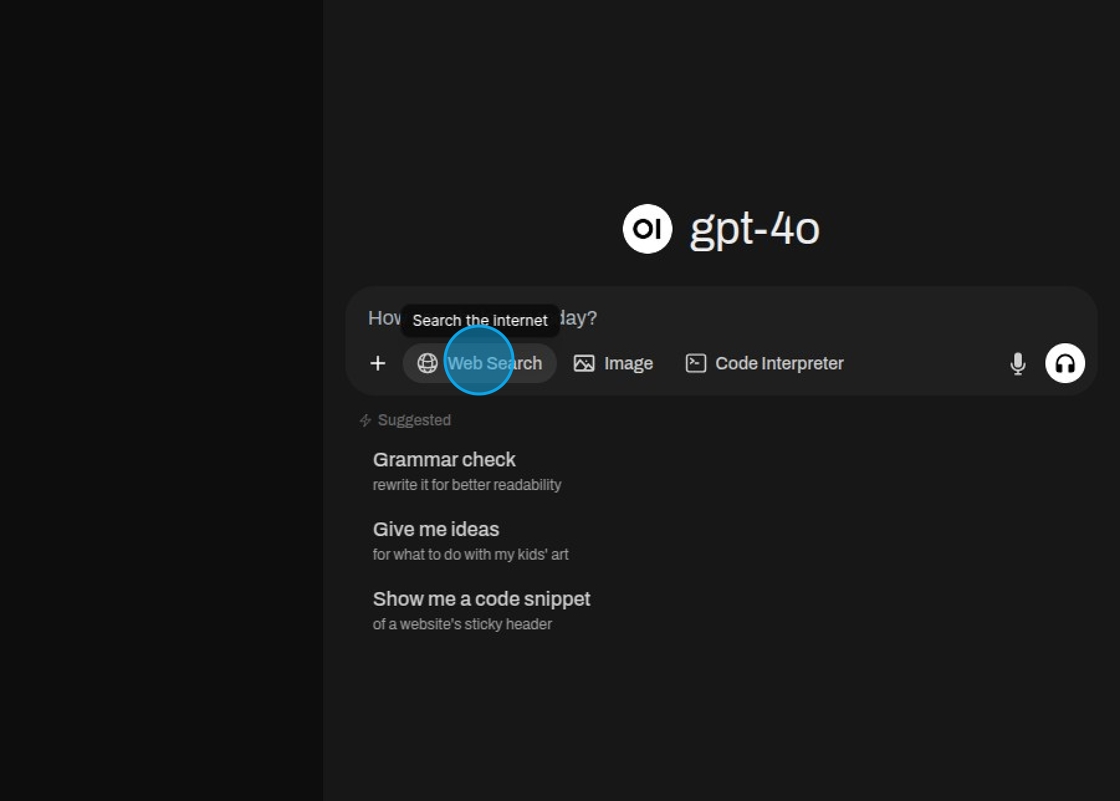
Select "Web Search".
Enter something you want to search for.
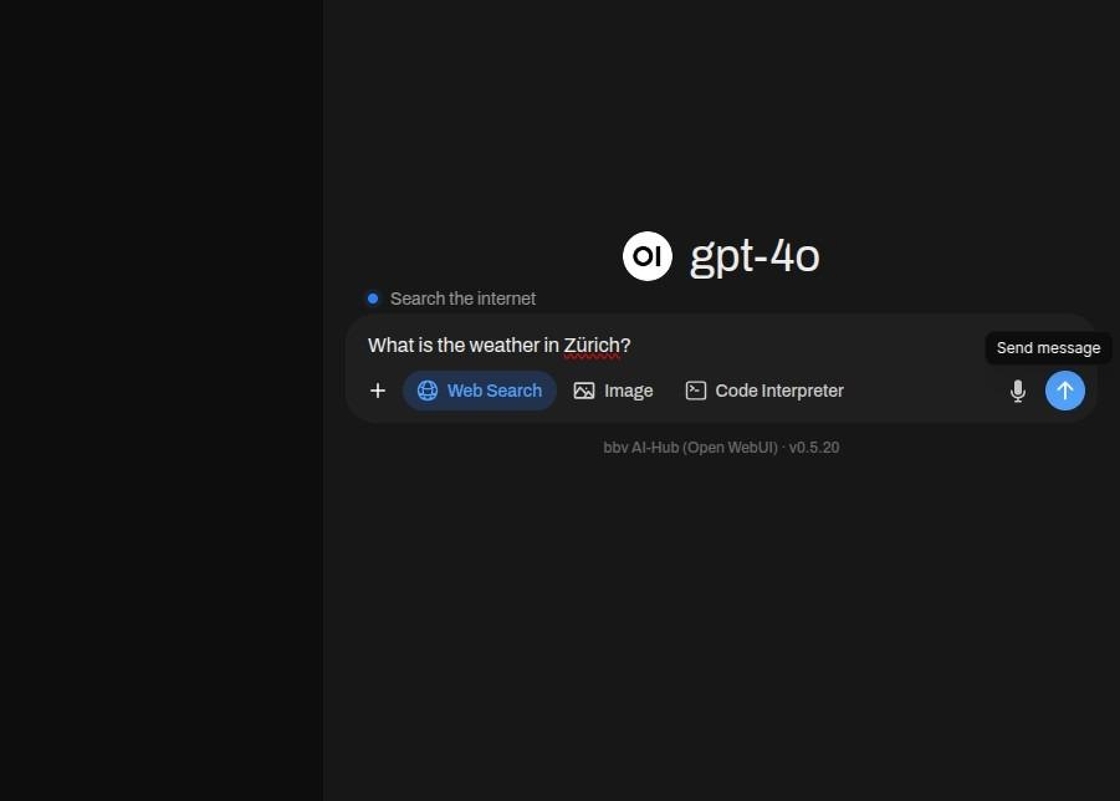
The model will take some time coming up with a search query and then executing that search. After which it will output what it found.
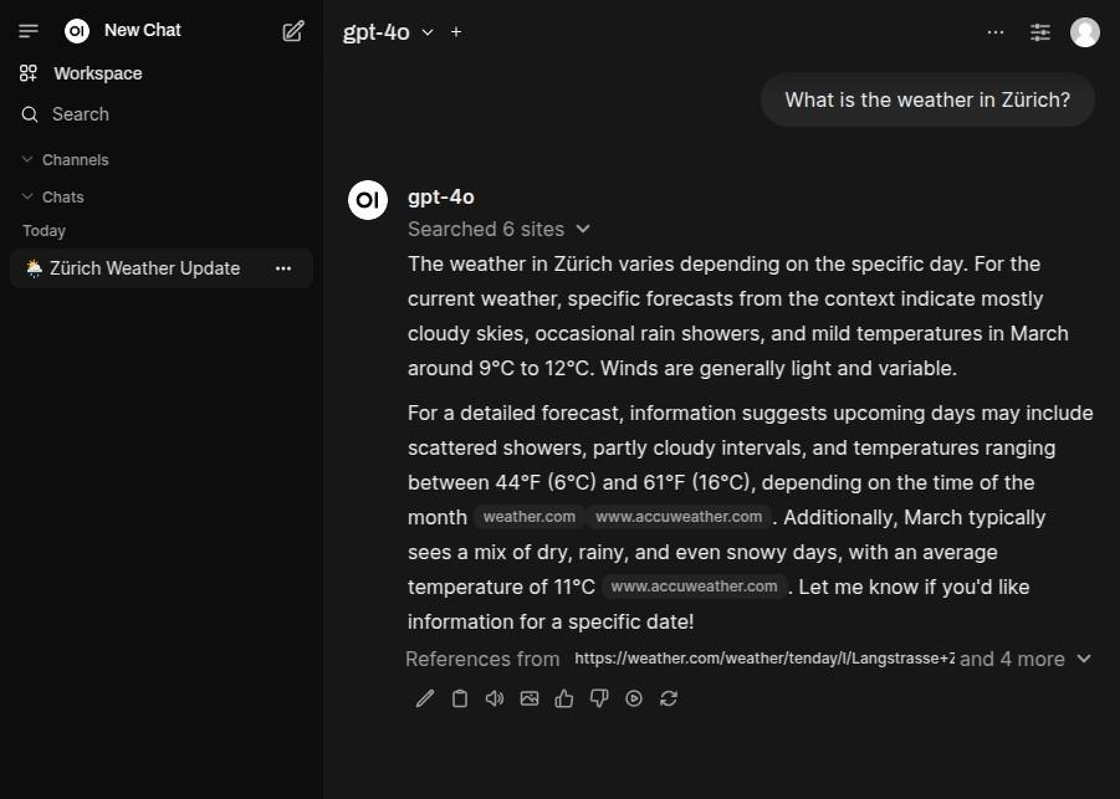
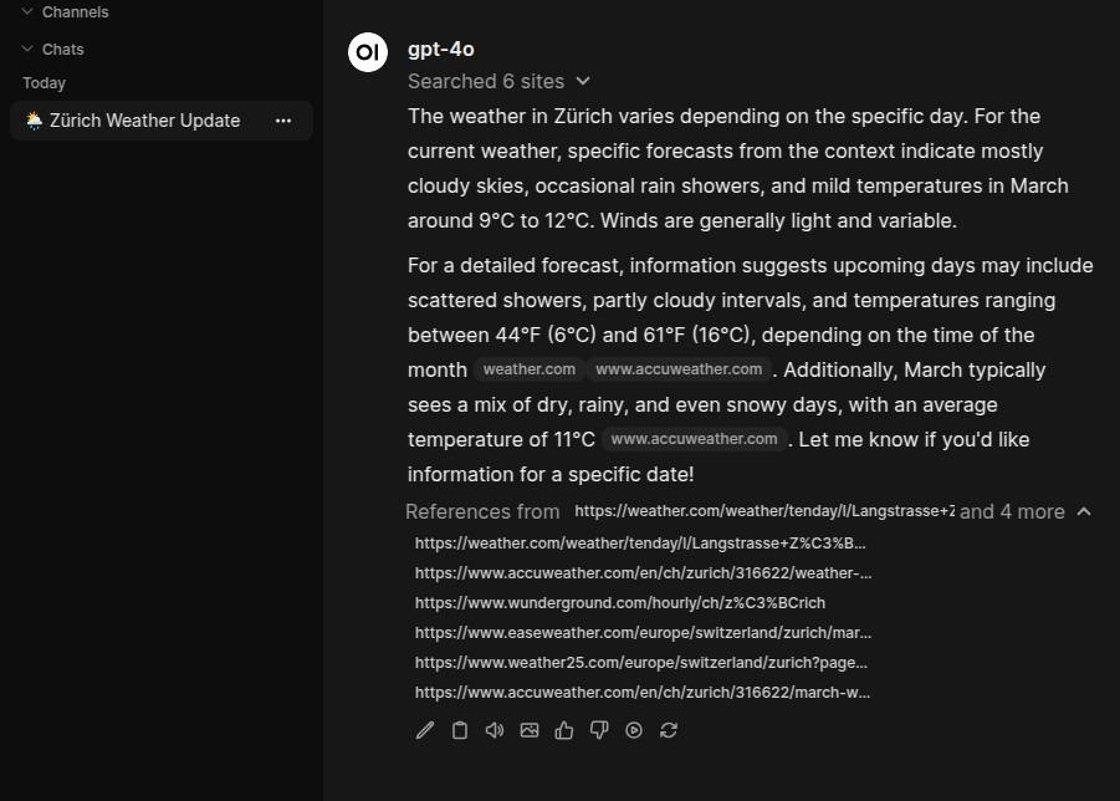
The websites it retrieved the information from are listed as references.
Search configuration
Web search can be enabled or disabled platform-wide, and restricted to specific user roles through role-based access control, so different policies apply to different use cases or user groups. It can be modified at runtime without system changes.
Search restrictions
Organizations can limit searches to approved domains, trusted sources, or specific content types like academic institutions or government websites.
Search queries can be validated, filtered, or transformed to ensure compliance with data protection policies and prevent sensitive information leakage.
Retrieved web content can be validated against organizational standards before presentation.
Search restrictions can align with industry regulations, internal policies, or contractual obligations.
Source attribution
When a chat uses web search, the system provides traceable attribution of external sources.
Users see clear distinctions between internal knowledge and external web sources. Web results appear as structured, clickable citations with URLs, titles, and content previews. Users receive information about why specific sources were retrieved.
Every search query, retrieved result, and user interaction is captured for audit purposes. The entire search process - from query validation through result filtering to presentation - is traceable through the observability infrastructure.
Use cases
Users supplement the model's own knowledge with current market data, regulatory updates, industry news, or technical documentation from external sources.
Where a topic is too recent or too niche for the model to know, external information fills the gap while sources stay clearly attributed.
Claims can be validated against authoritative external sources.
Governance and security
Organizations can ensure that search queries don't expose sensitive information to external providers through query validation and filtering.
Web content is validated against organizational standards before presentation, preventing inappropriate or unreliable sources from reaching users.
The permission system allows control over which users or groups can use web search for which purposes.
Complete audit trails and transparent source attribution support compliance with data governance regulations and industry standards.
Configurable restrictions and validation mechanisms let organizations balance the value of external information with their risk tolerance and compliance obligations.